Air Classifier Impact Mill vs Standard Impact Mill: Key Differences & Selection Guide
Air Classifier Impact Mill vs Standard Impact Mill: Key Differences & Selection Guide
Air Classifier Impact Mill vs Standard Impact Mill: Key Differences & Selection Guide. You will often compare regular impact mills and air classifier impact mills when purchasing dry grinding equipment for powder processing. Many plant managers see these units as interchangeable since they both use high-speed impact to break fragile solids. This misconception frequently leads to uneven powder quality, low yield, additional downstream equipment expenses, or needless overinvestment.
One key component—built-in dynamic air classification—is the main distinction. An air classifier impact mill integrates both real-time particle sorting and grinding into a single unit, whereas a normal impact mill just manages particle reduction. This article explains how each unit works, contrasts its practical advantages and disadvantages, and provides helpful advice to help you choose the best mill for your production objectives.
What Is a Standard Impact Mill?
A typical impact mill, also known as an impact pulverizer, is a stand-alone size-reduction device with a high-speed rotor equipped with hammers, blow bars, or pins. Particles are accelerated outward by rotating rotor components when raw feed enters the grinding chamber. In addition to secondary particle-to-particle collisions, materials break when they collide with stationary impact liners.
A perforated screen at the chamber base is used in many simple versions to regulate the maximum particle size. Without internal sorting, screenless versions constantly release all ground content. No more separation takes place within the unit once the particles have left the milling zone. Separate external equipment is required for any classification or sieving.
Core Characteristics of Standard Impact Mills
- Grinding action only; no internal particle sorting mechanism
- Fineness control relies on rotor speed, screen hole size or feed rate
- Simple mechanical layout with fewer drive assemblies
- Short material residence time within the grinding chamber
- Output contains a mix of coarse particles, target-size powder and excess ultrafine dust
Typical Standard Impact Mill Applications
Coarse and medium grinding of limestone, gypsum, construction rubble, rigid plastic scraps, biomass, fertilizer raw materials. Often used for pre-crushing ahead of secondary fine grinding lines.
What Is an Air Classifier Impact Mill (ACM)?
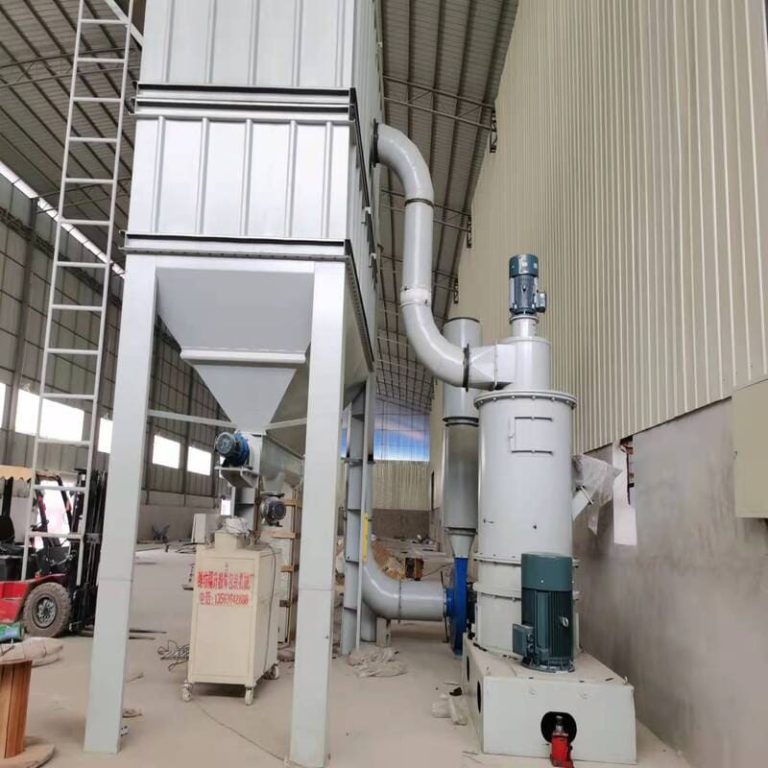
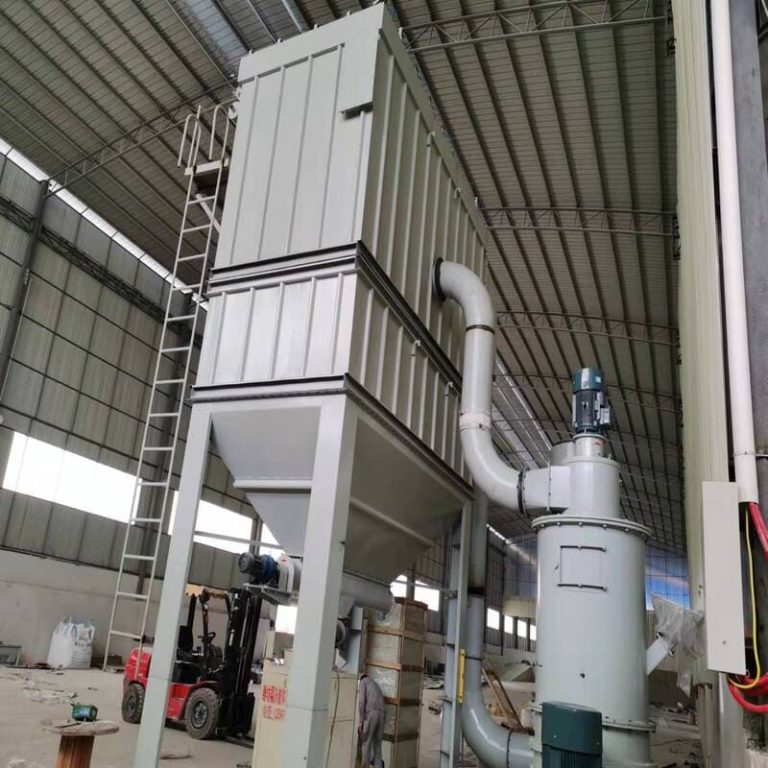
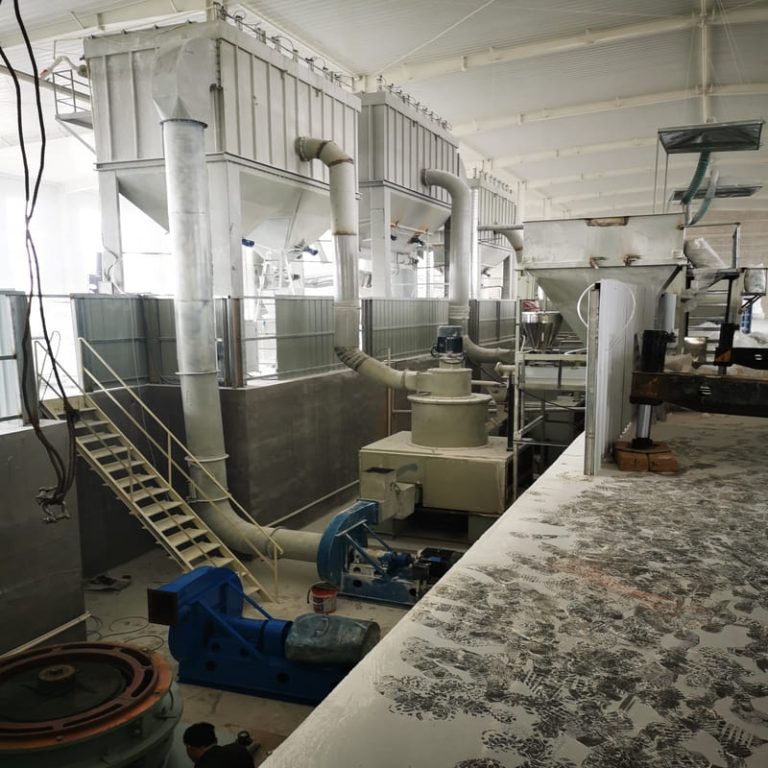
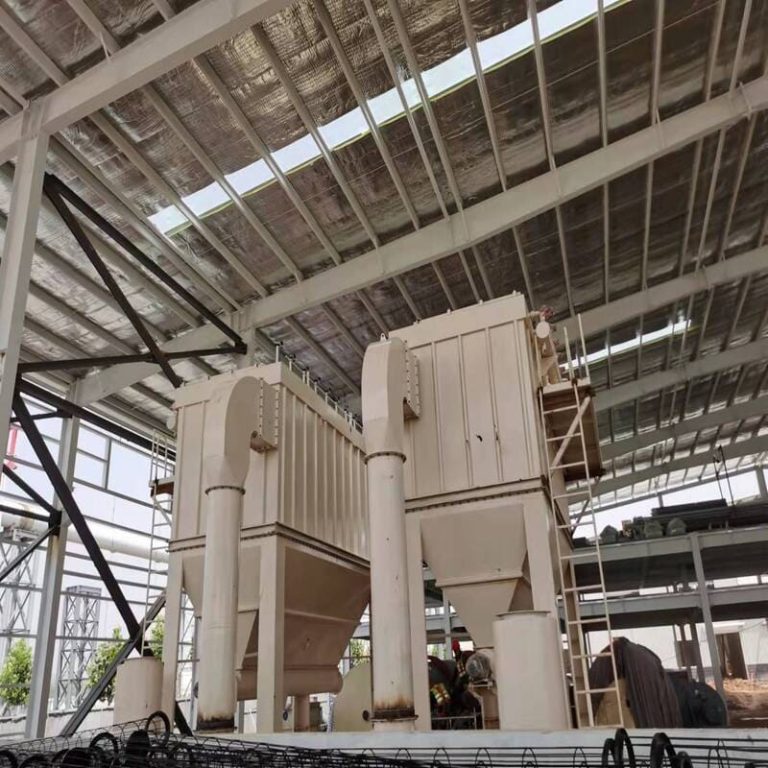
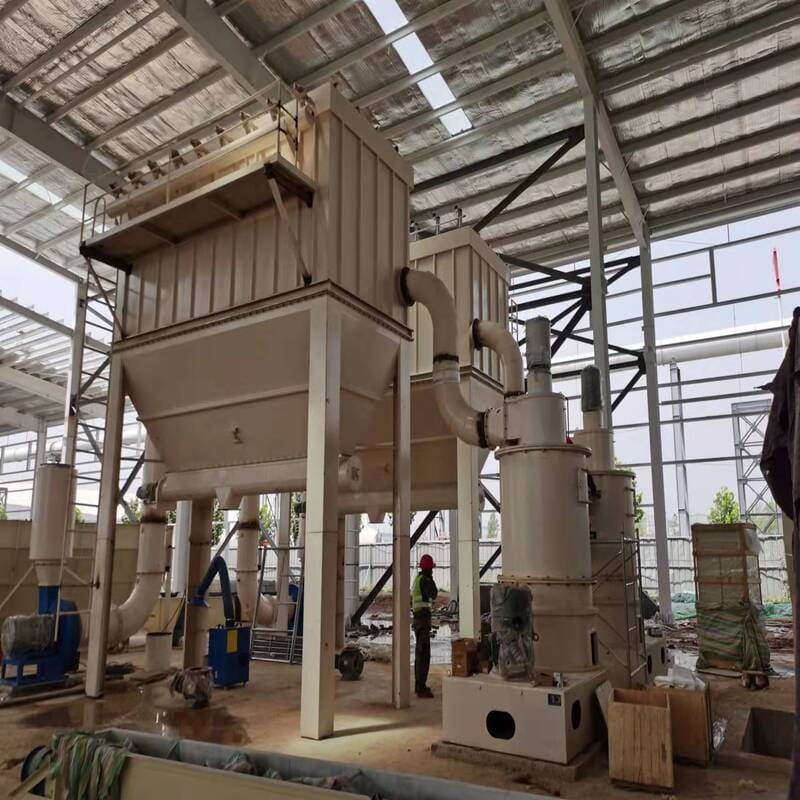
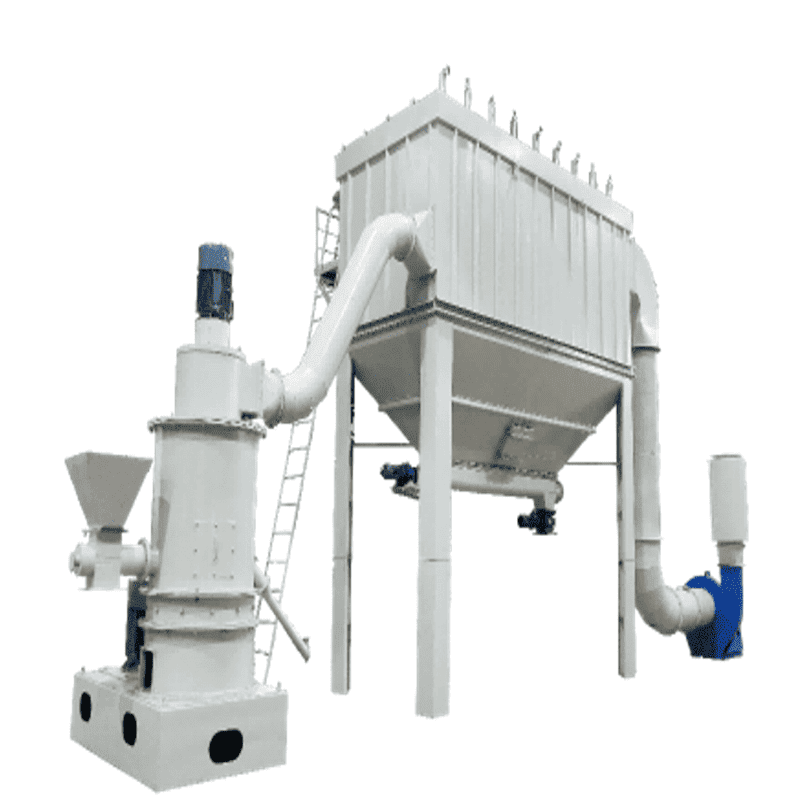
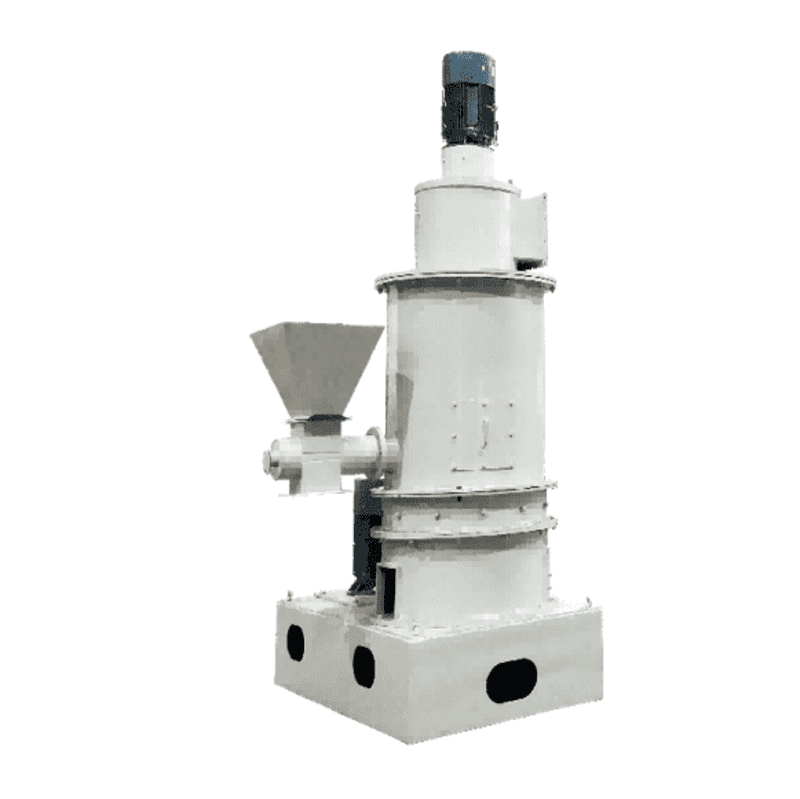
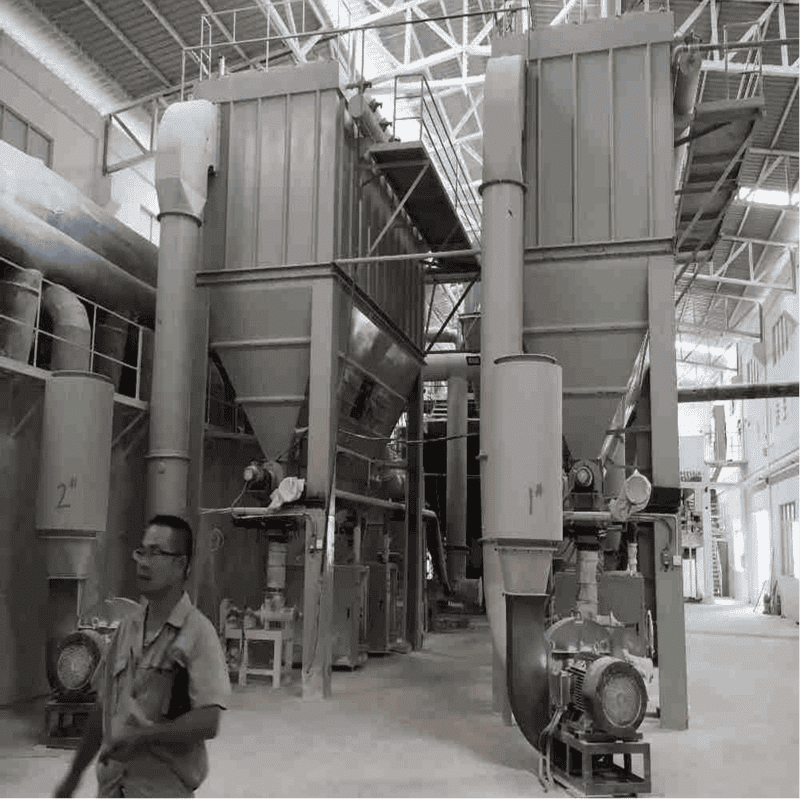
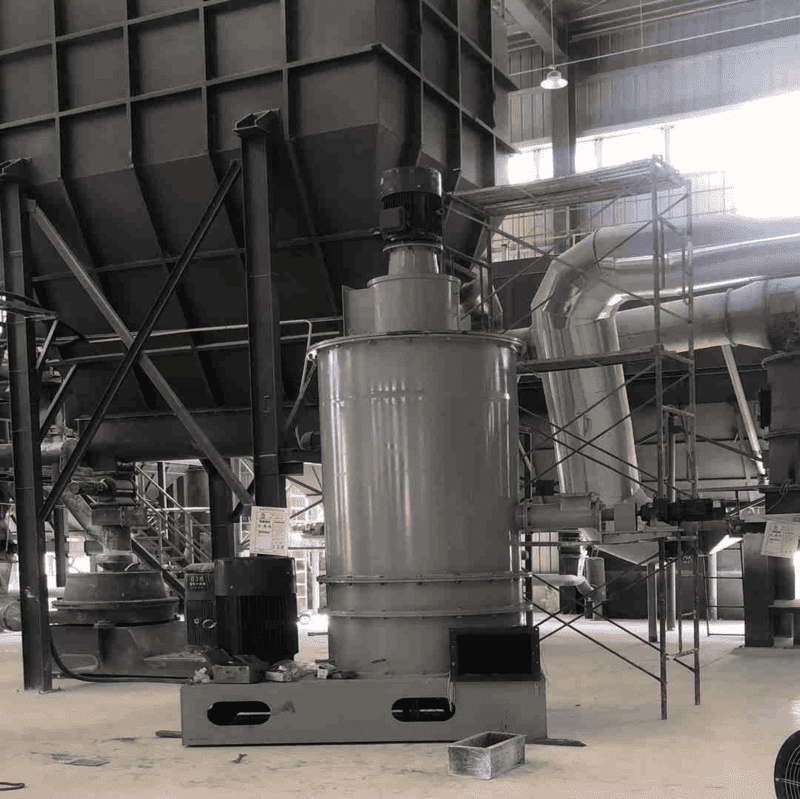
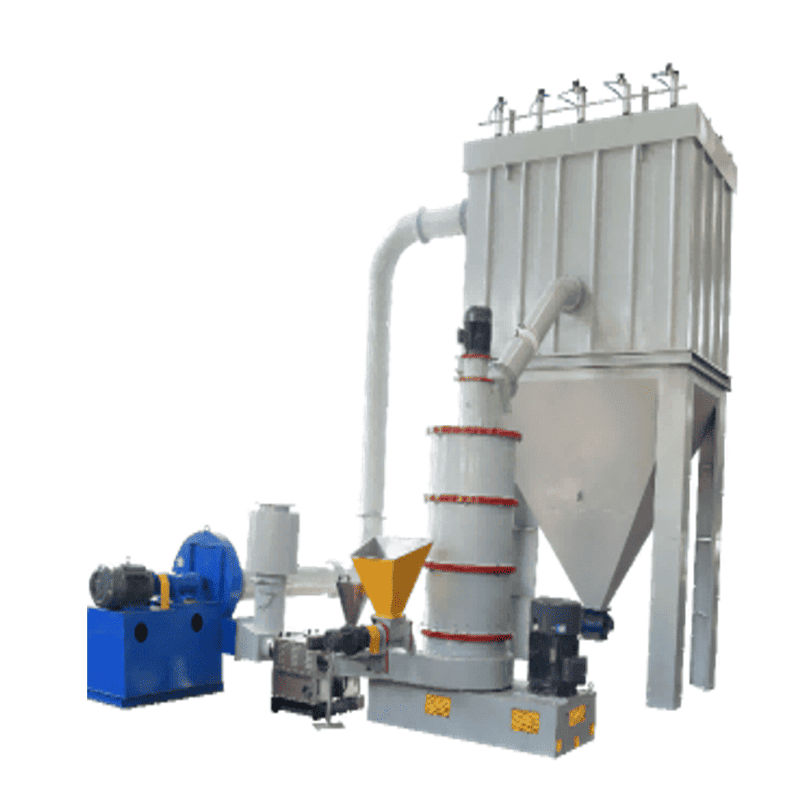
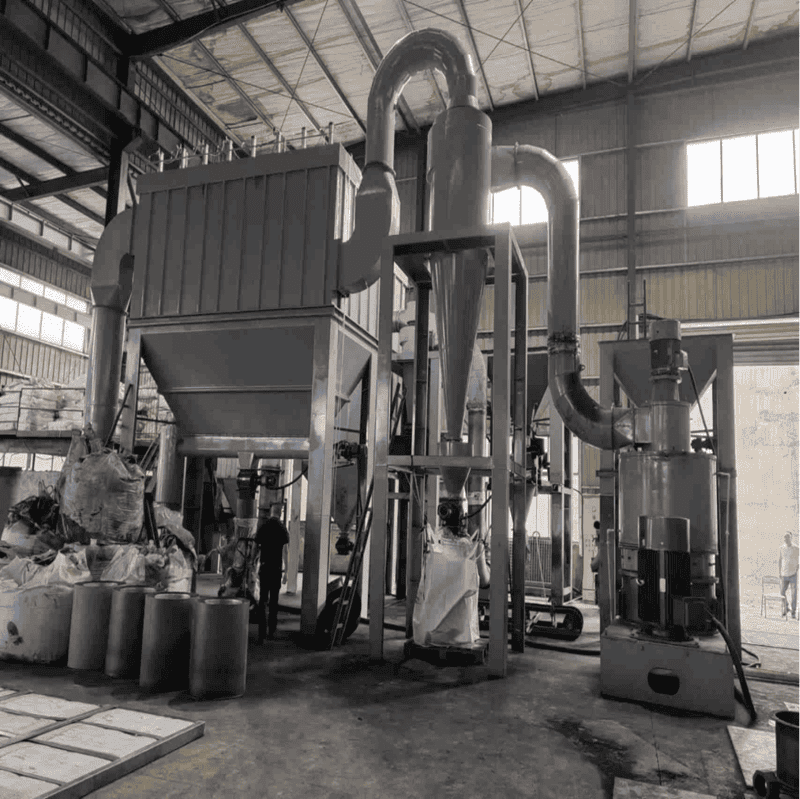
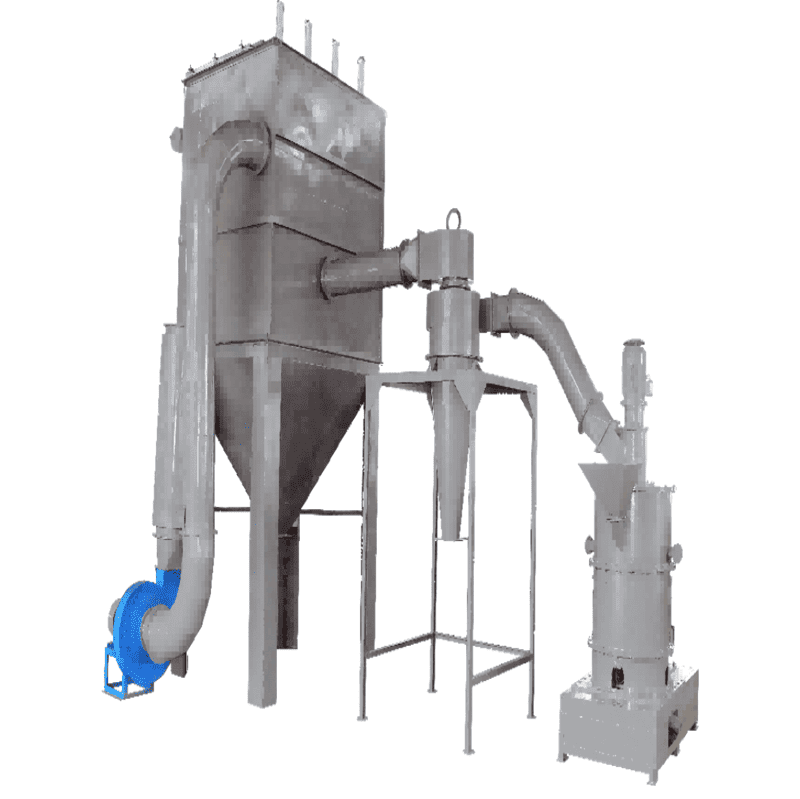
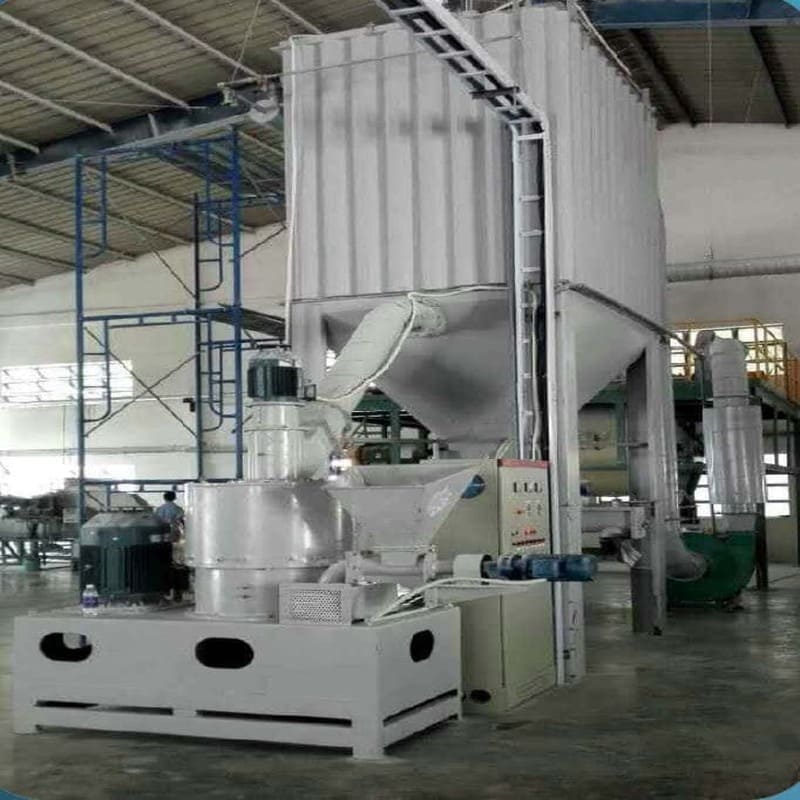
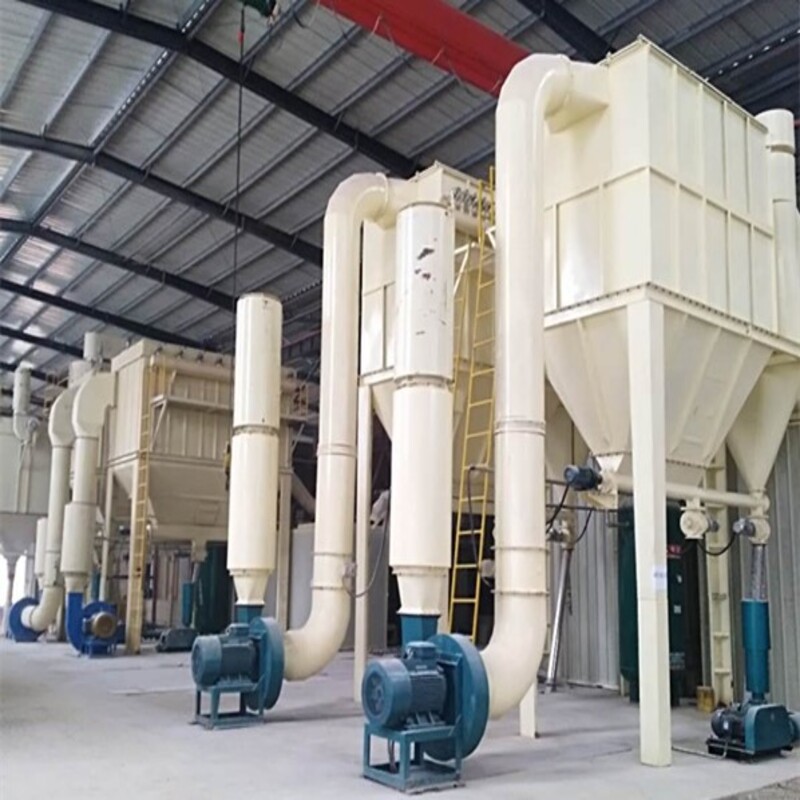
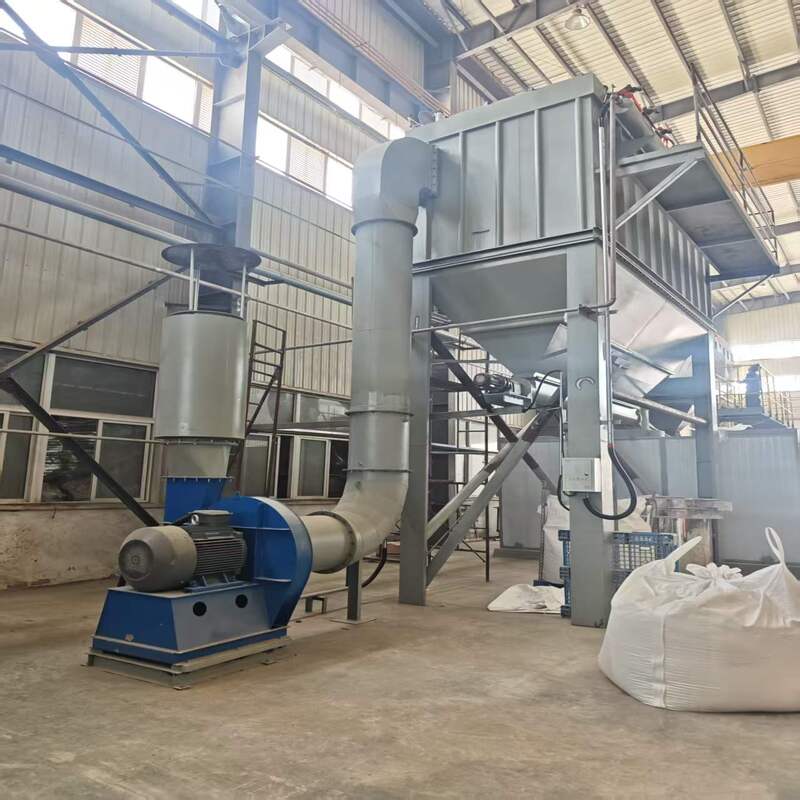
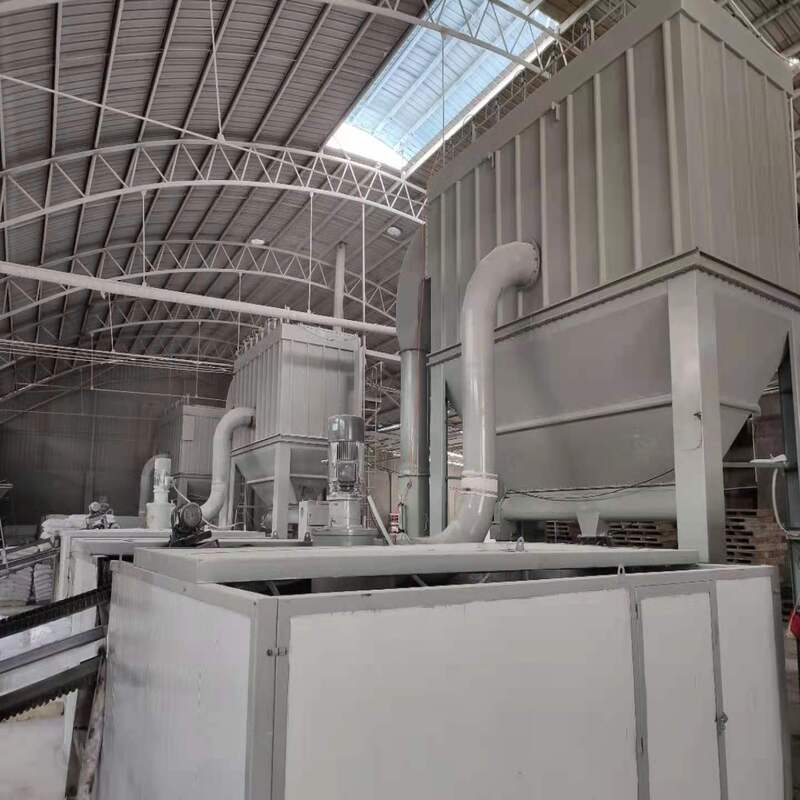
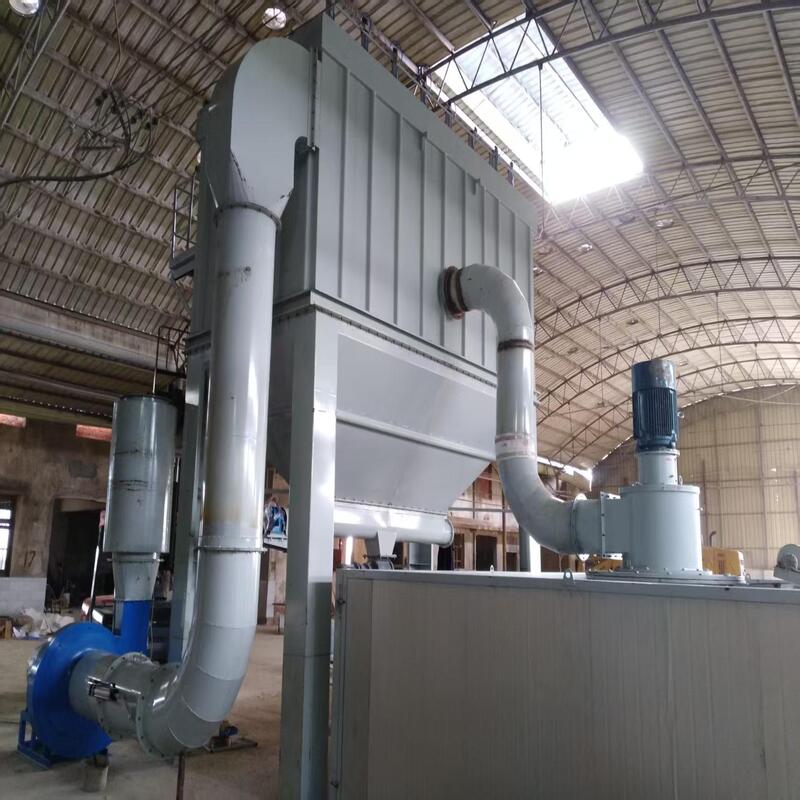
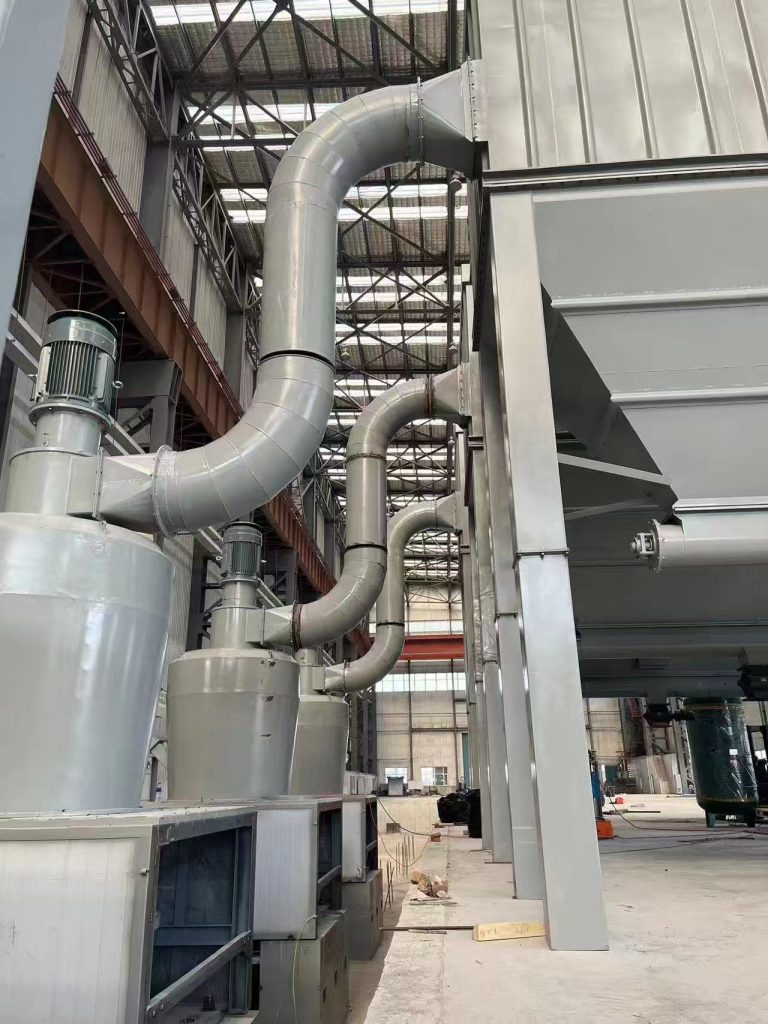
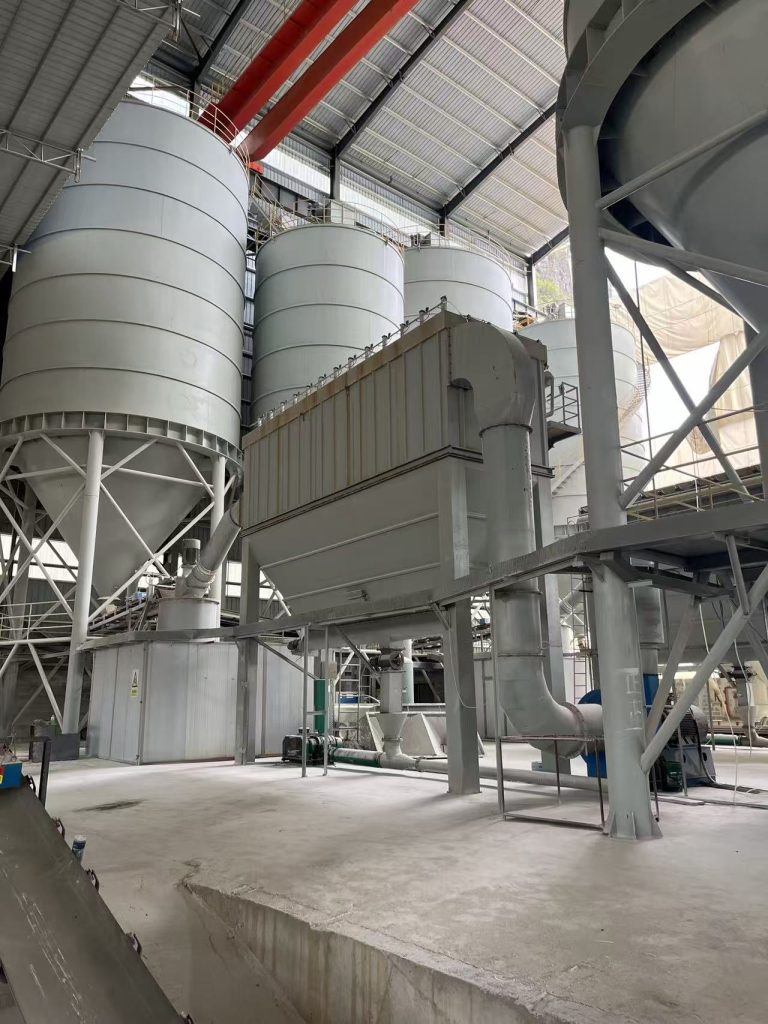
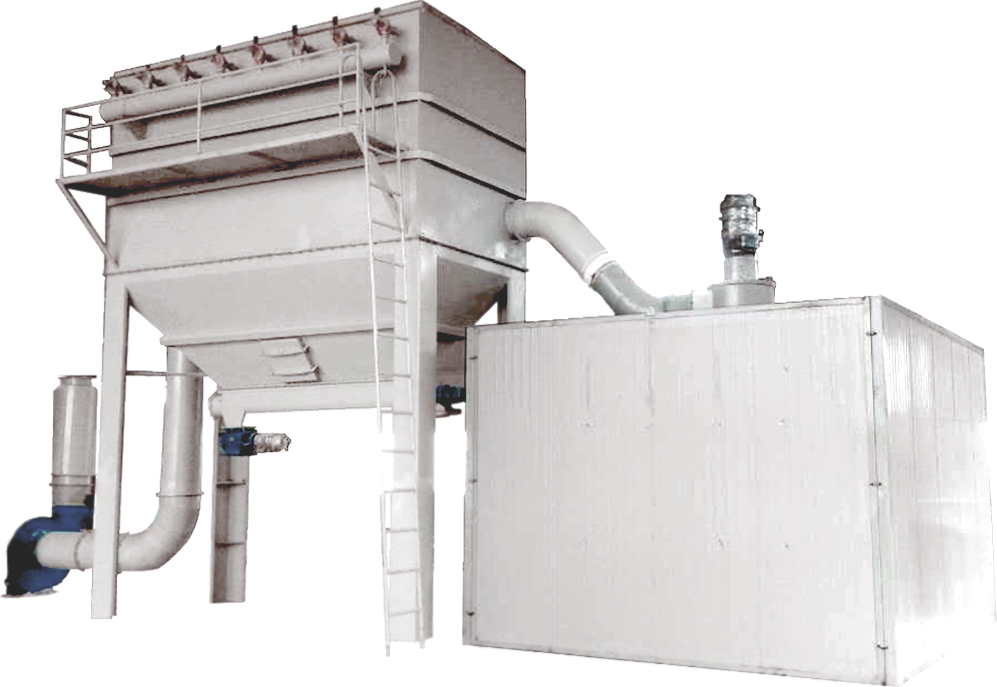
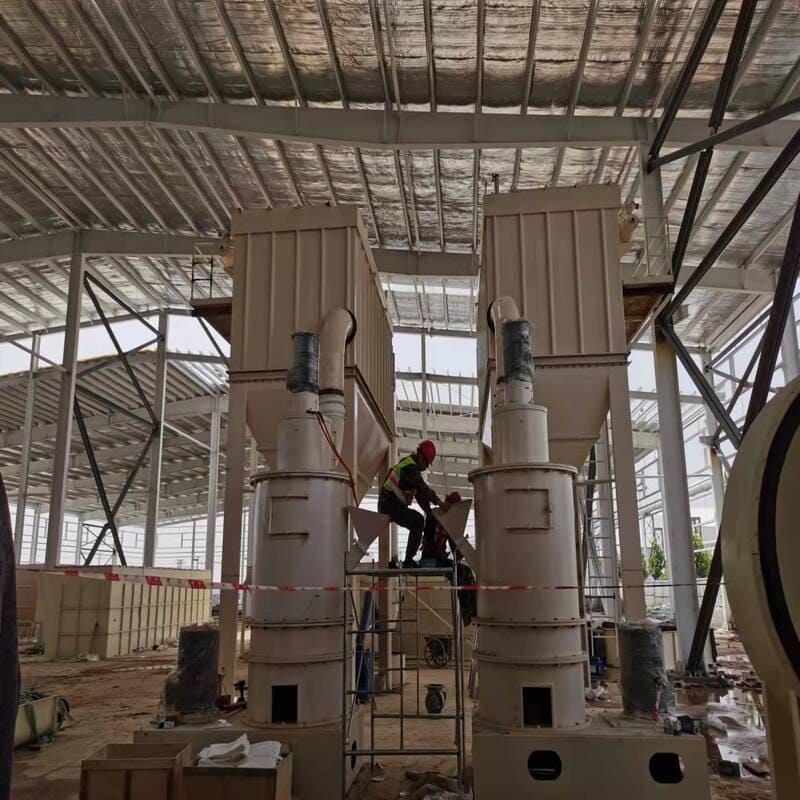
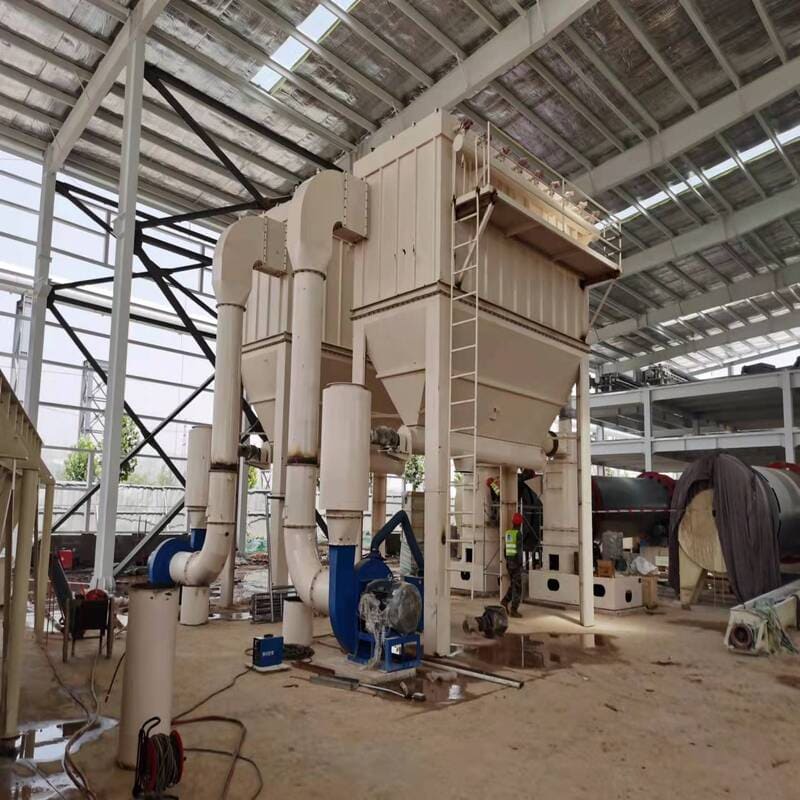
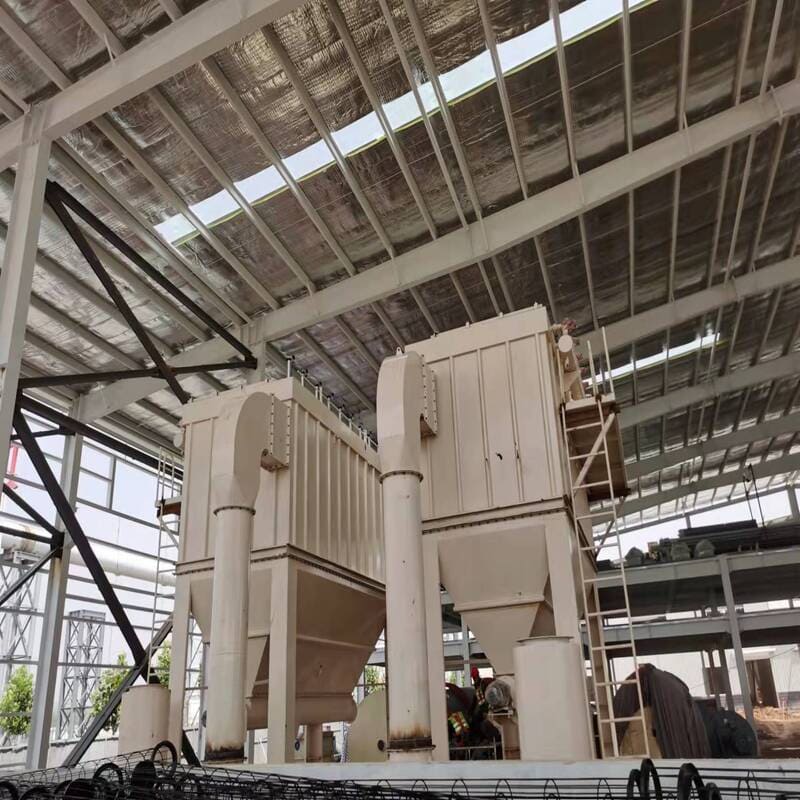
Impact grinding and dynamic air classification are combined into a single housing in an air classifier impact mill, often abbreviated as ACM. It has an innovative airflow system and a variable-speed classifier wheel in addition to the same impact-based crushing mechanism as a typical impact mill.
Particles are lifted upward toward the classification zone by airflow after materials are broken inside the grinding chamber. Opposing centrifugal force is produced by the classification wheel’s rotation. The wheel transports fine particles that fit the specifications to dust collectors or cyclones. For repeated reduction, oversized particles are sent back straight into the grinding zone. As a result, a closed internal loop of “grind – classify – recirculate coarse material” is created.
Operators adjust finished particle size by tuning classifier wheel speed, airflow volume and main rotor speed. No screen changes are required to switch product grades.
Core Characteristics of Air Classifier Impact Mills
- Combined impact grinding + dynamic air classification in one unit
- Precise, stepless particle size adjustment via electronic speed controls
- Internal recirculation eliminates most oversized particles from final output
- Continuous airflow assists with heat removal inside the grinding chamber
- Capable of stable fine and ultra-fine powder production under dry conditions
Typical Air Classifier Impact Mill Applications
Mineral fillers, food powders, spices, pharmaceutical raw materials, pigments, chemical additives, lithium battery materials, and any powder requiring tight particle uniformity.
Direct Comparison: Air Classifier Impact Mill vs Standard Impact Mill
1. Working Principle
Standard Impact Mill Only performs particle breaking. All ground material exits the mill together. There is no mechanism to send oversized chunks back for regrinding. If tight particle distribution is required, you must install external air classifiers or vibrating screens after the mill.
Air Classifier Impact Mill Grinding and classification happen simultaneously. The built-in classifier continuously rejects coarse particles and returns them to the grinding zone. The finished stream only contains particles that meet your target cut size.
2. Particle Size Control & PSD
For medium and coarse powder grades, standard impact mills produce results that are satisfactory. Their distribution of particle sizes is inherently broader. You will observe a mixture of fine and semi-coarse particles even with screens. Ultra-fine powder production results in excessive dust, heavy over-grinding, and energy waste.
A much smaller particle size distribution is produced by air classifier impact mills. The dynamic classifier limits large pollutants in the final output by producing a crisp top-cut. It is simple for operators to switch between different powder grades without having to halt production in order to swap screens. For coatings, culinary additives, and specialized minerals, this uniformity is essential.
3. Feed Material & Fineness Range
Medium to coarse grinding, often down to 50–100 μm, is a strong suit for standard impact mills. They function well as primary or secondary crushing equipment and can manage larger incoming feed lumps.
Depending on the hardness of the material, air classifier impact mills can produce medium-fine to ultra-fine powders, which frequently reach 2–20 μm. When fed with big chunks intended for primary crushing, their performance substantially declines, yet they still accept feed of a reasonable size.
4. Heat Generation & Product Sensitivity
Heat is trapped inside the grinding chamber of standard impact mills. During continuous runs, there is a discernible increase in temperature because particles stay in the impact zone until they leave. Materials that are susceptible to heat run the danger of melting, discolouration, or chemical deterioration.
Heat is removed via an ACM’s continuous airflow. Temperature spikes are less severe because completed particles have a short residence duration. Air classifier impact mills are far better suited for food-grade materials and organics that are somewhat heat-sensitive, even if they are not the same as cryogenic grinding.
5. System Layout & Footprint
A standalone standard impact mill has a compact footprint. If classification is needed, you will need to budget for separate fans, cyclones, external classifiers and connecting ductwork. The full processing line becomes longer and requires more floor space.
An all-in-one air classifier impact mill merges grinding and classification. It reduces the number of auxiliary machines, simplifies piping layout, and lowers overall installation space for complete closed-circuit fine grinding.
6. Maintenance & Wear Components
There are fewer moving parts in standard impact mills. Blow bars, hammers, and liners are the main wear items. Routine repairs often require little downtime, spare parts are inexpensive, and servicing is simple. With slightly moist or sticky feedstock, screen-equipped models are constantly at risk of screen blinding.
In addition to classifier vanes and airflow components for inspection, air classifier impact mills incorporate a second driving motor for the classifier wheel. Lists of worn parts are longer. The grinding rotor and classifier assembly are both checked as part of maintenance plans, which somewhat increases the burden for routine servicing.
7. Energy Efficiency
Standard impact mills frequently use less power per ton of output for basic coarse grinding without stringent particle restrictions. When no recycling of coarse material is required, energy losses remain low.
Air classifier impact mills are more efficient than regular impact mills combined with external classifiers when producing fine powder that needs to be classified. Airflow losses between individual machines are reduced by the integrated design. However, the additional power for the classification wheel is superfluous if you simply require coarse output.
8. Product Changeover
Screen shifting is necessary for standard impact mills with screens in order to modify fineness. With each grade change, manufacturing must be halted, the chamber must be opened, and parts must be replaced.
Particle size is solely adjusted by control panel parameter changes in air classifier impact mills. They are perfect for facilities that operate numerous powder formulations since grade changes occur in minutes without requiring mechanical disassembly.
Pros & Cons Overview
Standard Impact Mill Advantages
- Lower upfront purchase cost
- Simple construction, fewer motors and auxiliary parts
- Ideal for coarse and medium grinding tasks
- Less routine maintenance for basic crushing operations
- Well suited for pre-crushing ahead of other fine grinding equipment
Standard Impact Mill Disadvantages
- Wide particle size distribution without external sorting
- Cannot produce ultra-fine, tightly controlled powders
- Screen versions risk clogging with damp or slightly sticky materials
- Lengthy downtime when changing product grades
- Requires extra capital if you later decide to add classification
Air Classifier Impact Mill Advantages
- Narrow, consistent particle size distribution
- Adjustable fineness via digital controls, no hardware swaps
- Built-in closed-circuit recycling of coarse particles
- Integrated airflow reduces operating temperature
- Single-unit solution eliminates need for separate classifiers
Air Classifier Impact Mill Disadvantages
- Higher initial equipment investment
- Extra drive system increases maintenance complexity
- Not economical if you only need coarse grinding
- Classifier vanes experience wear when processing highly abrasive minerals
- Slightly higher power draw when running at low fineness settings
How to Choose Between Them
Select a Standard Impact Mill if
Ultra-fine fineness is not necessary; your goal is medium or coarse powder.
The mill is mostly used for pre-crushing prior to fine grinding downstream.
Precise particle cut control is seldom necessary, and product standards are rarely altered.
Your capital budget is limited, and you don’t intend to add classification anytime soon.
The material is not heat-sensitive, and a wide distribution of particles is acceptable.
Select an ACM (Air Classifier Impact Mill) if:
Compact, closed-circuit dry grinding in a single machine is required for your production line.
You need powder that is fine or ultra-fine and has strict particle size restrictions.
The performance of your final product is directly impacted by particle homogeneity.
You frequently alternate between different grades of powder.
You should refrain from buying and setting up additional external classifying equipment.
The raw material benefits from constant air cooling because it is rather heat-sensitive.
Impact Mill Blog
Roller Mills for Sale
About LKMixer
LKMixer is a professional manufacturer for grinding and mixing production line, grinder, mixer and granulator, shredder. These machines are widely used in food, pharmaceutical, cosmetic, health care products and chemical industries. The Food materials like Ginger, Garlic, seeds, potato, bean, tobacco, salt, cannabis, tea, Coffee, corn, Coffee, rice, pepper, grain as so on. Grinders have many types such as Air cooled crusher , grinding machine cassava which is suitable for cassava, Ultrafine Grinding Mill covers 80-200mesh, and also Winnowing Dust Grinder or other grinding machines like SF Hammer. Welcome to contact us for details. Contact us for more information. Proposal, catalog, quotation.
Recommend Reading
You may also interest in other topics:
dewalt demolition hammer , 120kw ev charger , head capping machine