Impact Mill vs Hammer Mill: Key Differences & How to Choose
Impact Mill vs Hammer Mill: Key Differences & How to Choose
Impact Mill vs Hammer Mill: Key Differences & How to Choose. It’s common to compare impact mills and hammer mills when looking into industrial size-reduction equipment. Both rely on high-speed impact to crush and pulverize raw materials, which generates confusion for many purchasers. On the surface, they look identical, but their internal mechanics, particle output, maintenance demands, and ideal uses separate them substantially.
Selecting the incorrect mill results in uneven product quality, frequent downtime, energy waste, and increased operating expenses over time. This book helps you choose between an impact mill and a hammer mill for your production line by breaking down each machine’s operation, outlining its main benefits and drawbacks, and providing specific criteria.
What Is a Hammer Mill?
A hammer mill is one of the most widely used grinding machines for medium-to-coarse material reduction. Its core assembly consists of a central rotating rotor fitted with freely pivoting hardened steel hammers.
Material enters the grinding chamber, and spinning hammers repeatedly strike incoming feedstock. Particles break apart from direct hammer blows, collision against the mill housing, and particle-on-particle contact. At the bottom of the chamber, a perforated screen traps oversized material for further grinding. Only particles small enough to pass through screen holes exit the machine as finished product.
Core Traits of Hammer Mills
- Particle size is primarily controlled by screen aperture size, rotor speed, and hammer arrangement
- Closed-loop grinding inside the chamber delivers a relatively narrow particle size distribution
- Best suited for brittle, low-to-medium abrasion materials
- Most standard models produce medium-fine to coarse granules
Common Hammer Mill Applications
Agricultural grain processing, animal feed milling, biomass shredding, limestone, gypsum, coal, food spices, fertilizer, and light industrial waste recycling.
What Is an Impact Mill?
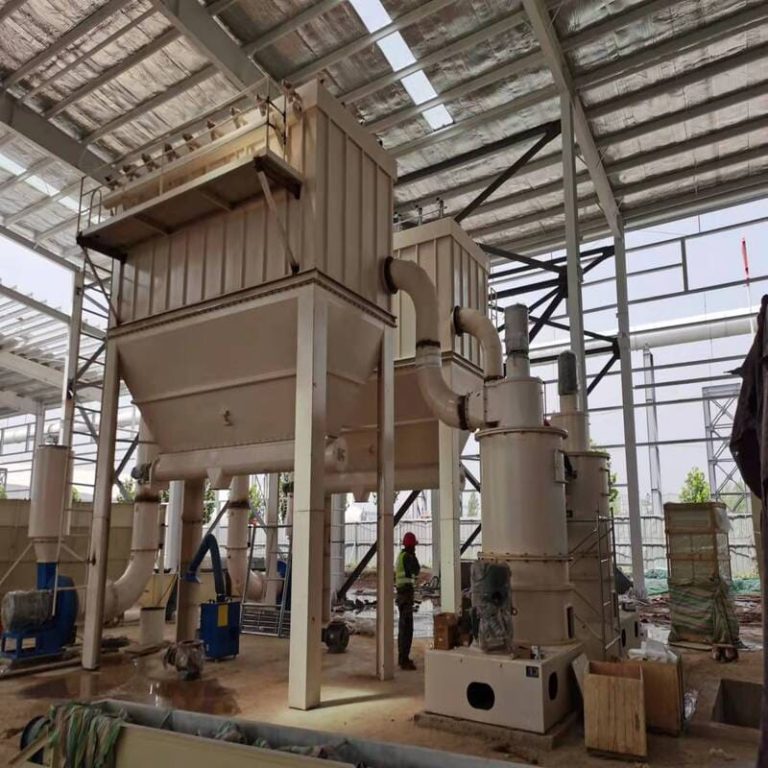
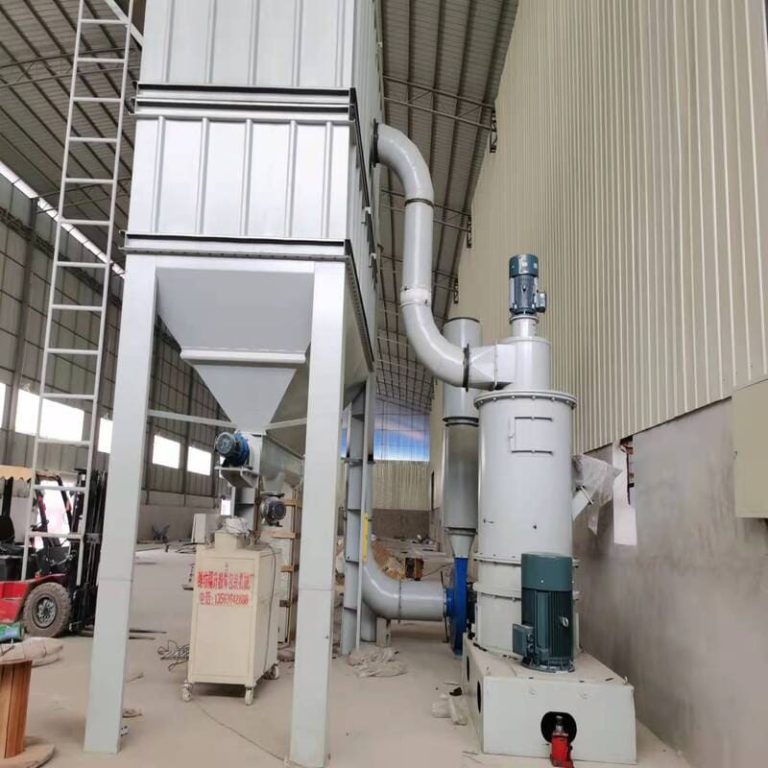
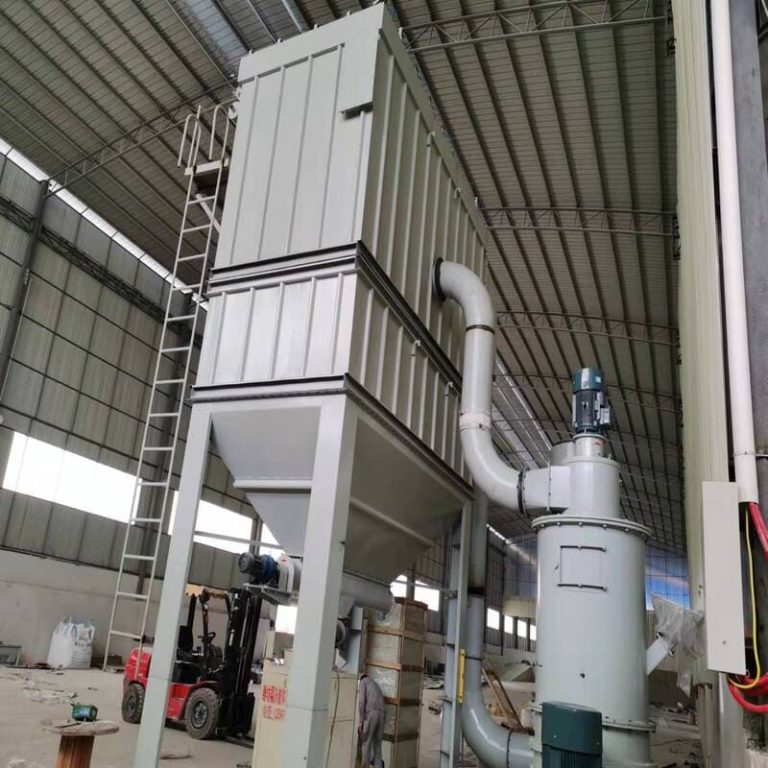
An impact mill (also referred to as an impact pulverizer) also uses kinetic energy for size reduction, but follows a different crushing sequence. Instead of swinging hammers striking material directly, the rotor accelerates raw materials outward at high velocity. Material is flung against fixed stationary impact plates, liners, or tooth rings lining the milling chamber. Shattering occurs when fast-moving particles collide against rigid fixed surfaces.
Many modern impact mills operate with air sweep systems. Airflow moves finished particles out of the chamber continuously, while coarse fragments remain inside to undergo repeated impact events. Premium models integrate built-in classifiers to separate fine powder automatically, removing the need for external screening equipment.
Core Traits of Impact Mills
- Size adjustment relies on rotor speed and the gap between rotor and impact liners; many versions do not use discharge screens
- Capable of finer grinding, including ultra-fine powder production depending on configuration
- Handles harder, more abrasive feedstock better than conventional hammer mills
- Greater flexibility to adjust particle shape, often producing cubical, uniform particles
Common Impact Mill Applications
Mineral processing, chemical powder production, recycling construction debris, plastic pulverization, dry ultrafine grinding, and high-volume secondary crushing.
Critical Differences Between Impact Mill and Hammer Mill
1. Working Principle
Hammer Mill: Reduction driven by moving swinging hammers physically striking material. Grinding happens inside a confined chamber with a screen barrier to regulate discharge. Impact Mill: Reduction driven by material colliding against stationary impact liners. The rotor accelerates particles; the material itself delivers most of the crushing force.
2. Particle Size & Quality
Hammer mills deliver consistent medium particle sizes. When configured with fine screens, they can grind finer, but screens easily clog with damp or sticky material. They tend to generate more irregular particle shapes.
Impact mills excel at producing controlled, cubical particles. With integrated classification systems, they achieve much finer powder grades. They produce fewer oversized fragments, though particle distribution can widen without proper airflow tuning.
3. Feed Material Compatibility
Hammer Mill Best For: Soft to moderately brittle, low-abrasion materials. Limestone, grain, wood biomass, gypsum, salt, feed ingredients. Heavy abrasive rock rapidly wears hammers and screens. Impact Mill Best For: Medium-hard to harder, moderately abrasive materials. Basalt, concrete rubble, minerals, rigid plastics. Many designs tolerate small variations in feed moisture better than screened hammer mills.
4. Throughput & Blockage Risk
Hammer mill throughput is limited by its discharge screen. Wet, sticky materials frequently blind screens, slowing production or causing jams. They perform reliably with dry, free-flowing feedstock.
Most impact mills operate without restrictive bottom screens. Air-swept variants continuously evacuate finished material, making them less prone to clogging. They generally maintain stable throughput at consistent feed rates.
5. Maintenance & Wear Parts
Hammer mills’ primary wear components are hammers and screens. Hammers wear unevenly and require regular rotation or replacement. Screens are consumable and need frequent checking in high-volume lines. Overall part replacement is simple and spare parts are low-cost.
Impact mills wear parts include impact liners, rotor tips, and blow bars. These components experience intense abrasion when processing hard rock. Wear part costs are typically higher, and liner replacement often takes longer than swapping hammer sets.
6. Energy Efficiency
For coarse grinding tasks, hammer mills often have an energy advantage. The direct hammer impact converts motor power efficiently into material breakage.
Impact mills consume slightly more power for equivalent particle sizes, especially when running at high RPM for ultra-fine grinding. Their efficiency improves significantly when processing hard feedstock that would overwork a hammer mill.
Advantages & Disadvantages At A Glance
Hammer Mill Pros
- Simple mechanical structure, easy installation and operation
- Low initial investment and affordable spare parts
- Tight particle control via interchangeable screens
- Great for standard coarse and medium grinding in agriculture & biomass
Hammer Mill Cons
- Screen clogging risk with damp or sticky materials
- Poor longevity when grinding highly abrasive materials
- Struggles to consistently produce ultra-fine powder
- Higher risk of overload if oversized feed enters the chamber
Impact Mill Pros
- No discharge screen, minimal blockage risk
- Handles harder raw materials effectively
- Flexible tuning for coarse to ultrafine output
- Produces cleaner, more uniform cubical particles
- Many models support continuous closed-circuit grinding
Impact Mill Cons
- Higher upfront equipment purchase price
- Expensive wear liners increase long-term operational costs
- More complex setup, especially air-classified models
- Slightly higher power consumption for medium-grind applications
How To Choose: Impact Mill or Hammer Mill?
Pick a Hammer Mill if:
- You process soft, brittle materials such as grain, feed, wood chips, gypsum
- Your target output is medium-coarse granules, not ultrafine powder
- You need straightforward, low-maintenance equipment with budget-friendly spares
- Feed material is dry and free-flowing with low abrasiveness
Pick an Impact Mill if:
- Raw materials are medium-hard, abrasive rock, concrete, or rigid plastics
- You require fine or ultra-fine finished powder
- Feedstock carries minor moisture and you want to avoid screen blockages
- Particle shape (cubical, low flakiness) is critical for your end product
- You plan to run high-volume secondary crushing or recycling operations
Final Thoughts
Because some hybrid hammer-impact machines include elements of both types, it can be difficult to distinguish between impact mills and hammer mills. Nevertheless, the secret to choosing the best investment is still to comprehend their basic crushing process.
Don’t depend only on the specs provided by the equipment seller. Set up test runs with your real raw material whenever you can. Depending on feed hardness, moisture content, target particle size, and required hourly throughput, the same mill can produce radically different results. Over the course of the machine’s service life, you can minimize downtime and maximize return on investment by matching your material characteristics and production goals to the mill’s strengths. value to the mill configuration instead of presuming that every impact mill produces the same level of fineness.
Impact Mill Blog
Roller Mills for Sale
About LKMixer
LKMixer is a professional manufacturer for grinding and mixing production line, grinder, mixer and granulator, shredder. These machines are widely used in food, pharmaceutical, cosmetic, health care products and chemical industries. The materials like Laudry Detergent, chalk, Ceramic The Food materials like Potato, Licorice Flavored Spice, seeds, potato, bean, tobacco, salt, cannabis, tea, Green Onion, corn, Coffee, rice, pepper, grain as so on. Grinders have many types such as Air cooled crusher , grinding machine cassava which is suitable for cassava, Ultrafine Grinding Mill covers 80-200mesh, and also Winnowing Dust Grinder or other grinding machines like SF Hammer. Welcome to contact us for details. Contact us for more information. Proposal, catalog, quotation.
Recommend Reading
You may also interest in other topics:
demolition hammer hm0810t , ev wall charger , filling capping machine