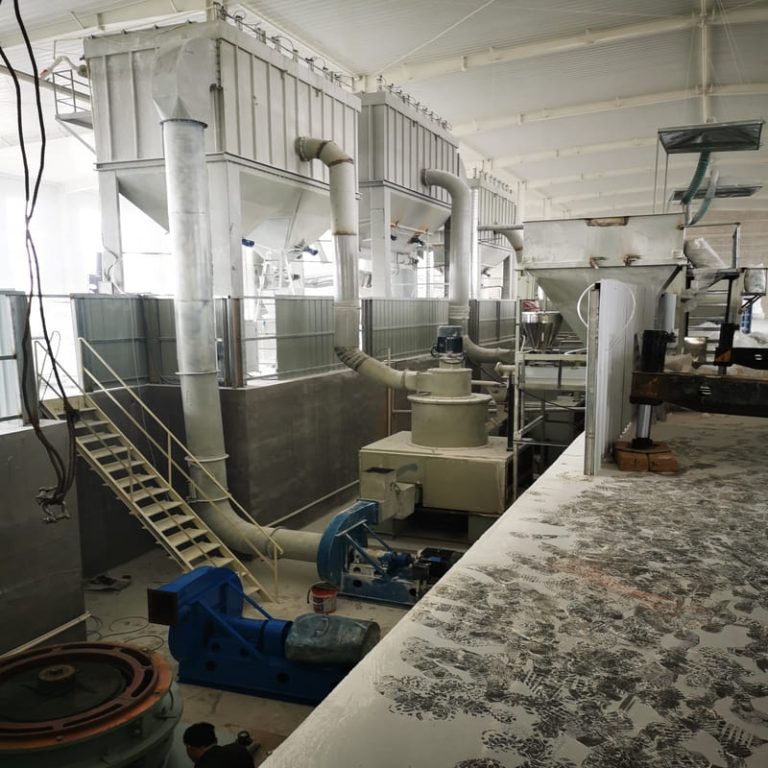
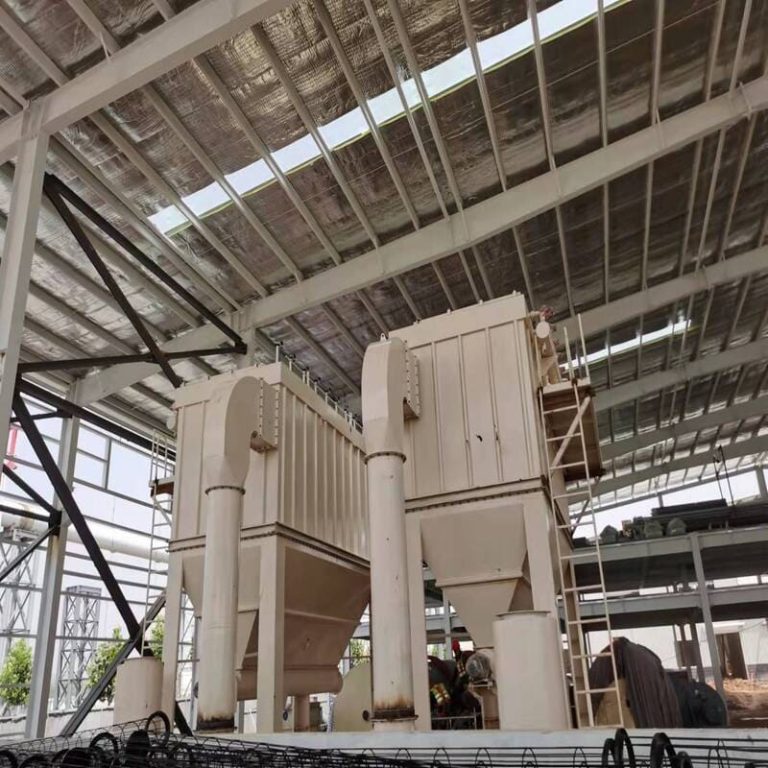
Impact Mill vs Pin Mill: Core Differences & How to Choose Your Size Reduction Equipment
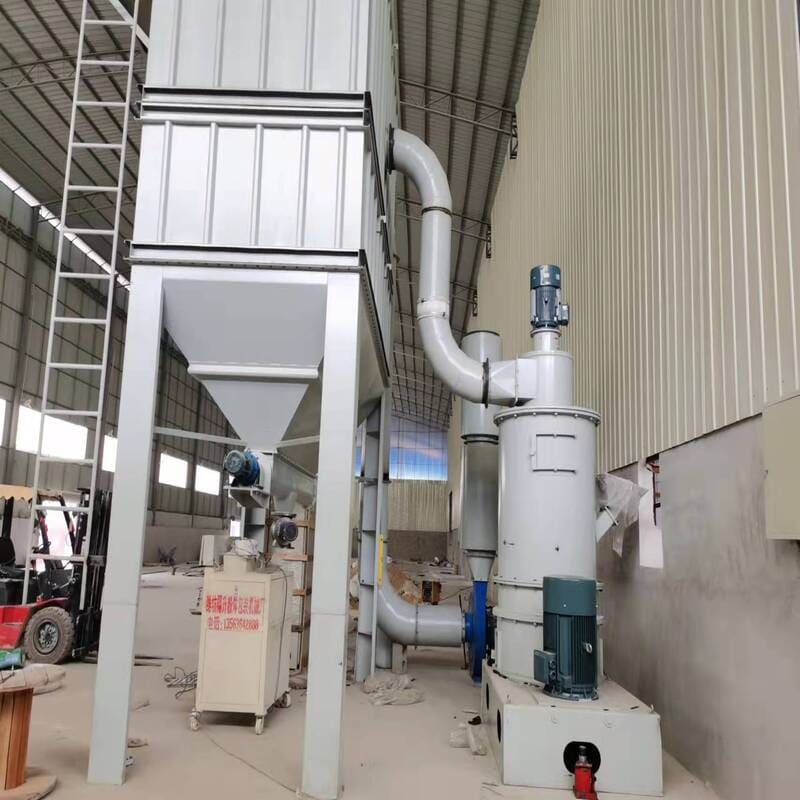
Impact Mill vs Pin Mill: Core Differences & How to Choose Your Size Reduction Equipment
Impact Mill vs Pin Mill: Core Differences & How to Choose Your Size Reduction Equipment. Pin mills are technically a subclass of impact grinding equipment, as anyone looking for dry grinding equipment will soon discover. However, due of the differences in their internal architecture, grinding action, end powder quality, and optimal use cases, plant operators often compare regular impact mills directly to dedicated pin mills.
Inconsistent particle dispersion, product overheating, excessive wear, or lower-than-expected throughput are the results of many purchasers’ misguided treatment of them as straightforward substitutes. This guide explains how each machine works, outlines useful benefits and drawbacks, and establishes precise selection criteria based on actual processing experience.
What Is an Impact Mill?
The high-speed rotor of a general-purpose impact mill, sometimes referred to as an impact pulverizer, is equipped with blow bars, beaters, or impact blocks. Particles are accelerated outward at a high speed by rotating components as raw material enters the grinding chamber. When the material strikes stationary impact liners attached to the mill housing, it breaks. Particle-on-particle collisions within the chamber cause further fragmentation.
The majority of commercial impact mills can be used in conjunction with air classification systems to continually separate fine powder. In order to reduce the possibility of clogging during dry processing, many models do not include discharge screens. They are well-liked in bulk chemical grinding, construction waste recycling, and mineral processing because of their design, which prioritizes managing a wider range of feedstock hardness.
Key Characteristics of Impact Mills
- Breakage relies on particles striking heavy stationary liner plates
- Adjust output fineness by changing rotor speed and liner gap
- Handles coarse feed and medium-hard materials effectively
- Flexible configuration options: open circuit or closed circuit with classifiers
- Produces angular, cubical particles with a slightly wider particle size spread
Typical Impact Mill Applications
Limestone, gypsum, rigid plastic recycling, construction rubble, biomass, medium-hard minerals, fertilizer raw materials and bulk industrial powder production.
What Is a Pin Mill?
A specialized high-speed impact grinder is called a pin mill. One moving rotor disc and one stationary stator disc, each equipped with concentric rows of hardened pins, make up its core. The material is fed into the chamber’s center. Particles are forced outward through the intermeshing pin arrays by centrifugal force. In addition to shear and particle collisions as the material moves through the dense pin field, size reduction happens as a result of repetitive sharp hits against pins.
Some premium versions use counter-rotating twin pin discs to enhance relative impact speed for finer outputs. GMP criteria for food and pharmaceutical manufacture are met by several sanitary-grade pin mills, which are nearly invariably designed for fine grinding rather than coarse crushing.
Key Characteristics of Pin Mills
- Grinding zone formed by interlocking rows of pins between rotor and stator
- Combination of sharp impact and mild shear delivers tight particle size distribution
- Short material residence time, limiting heat buildup inside the chamber
- Optimised for fine to ultra-fine powder; not designed for large incoming feed lumps
- Easy to access and fully clean, suitable for frequent product changeovers
Typical Pin Mill Applications
Spices, sugar, flour, food additives, pharmaceutical excipients, herbal powders, pigments, dyes, soft crystalline chemicals, cosmetic raw materials and low-abrasion mineral fillers.
Head-to-Head Comparison: Impact Mill vs Pin Mill
1. Working Principle
Impact Mill: Material is flung against heavy fixed impact liners. Breakage energy comes from high-velocity collision between particles and chamber walls. The grinding zone is relatively open. Pin Mill: Material passes through a dense maze of intermeshing pins. Particles receive frequent, repeated small blows and shear forces. The grinding area is concentrated between the two pin discs.
2. Feed Material Requirements
Impact mills accept larger feed lumps and can process medium-hard, moderately abrasive raw materials. They often serve as secondary crushing equipment after primary breakers. Hard rock will still accelerate wear parts, but they tolerate wider variation in feed size.
Pin mills require pre-crushed, fine feedstock. Large chunks cannot pass efficiently through the pin gap. They perform best with soft to semi-brittle, low-abrasion materials. Fibrous or highly sticky feed easily builds up on pin surfaces and disrupts operation.
3. Particle Size & Particle Quality
Impact mills deliver reliable medium to fine grinding. Without an external classifier, the finished powder usually has a broader particle size range. Particles are angular and cubical, which works well for aggregates and mineral fillers. Reaching ultra-fine grades often requires multiple grinding passes.
Pin mills excel at producing consistent fine powder with a tighter particle size distribution. Short residence time reduces over-grinding and excess dust generation. The mild shear action creates more uniform particles, a major advantage for food ingredients, pharmaceuticals and colour pigments where consistency is critical.
4. Heat Generation & Heat-Sensitive Materials
Standard impact mills can create noticeable heat during continuous operation. Energy is released in concentrated impact zones, which raises product temperature. This makes them less ideal for heat-sensitive materials that risk melting, degradation or flavour loss.
Pin mills generate far less thermal rise. Material moves quickly through the pin field and does not linger inside the chamber. This is why they are widely chosen for sugar, spices, herbal extracts and low-melting-point polymers that cannot tolerate excessive heat.
5. Maintenance & Wear Components
Impact mill main wear parts are blow bars and impact liners. These large components are straightforward to replace, and heavy-duty alloy options extend service life for abrasive feeds. Inspection intervals are generally longer in continuous bulk processing.
Pin mill consumables are individual pins. While single pins are low-cost, dozens of pins need regular inspection. If processing even mildly abrasive materials, pins wear unevenly and require periodic rotation or full replacement. Complete pin disc servicing can take longer than swapping impact liners.
6. Sanitation & Product Changeover
Standard industrial impact mills are built for heavy bulk processing. Internal corners and large liners can trap residual powder; full cleaning is time-consuming, limiting frequent recipe switching.
Many pin mills feature smooth, polished housings with minimal dead zones. The hinged chamber allows quick access to pin discs. Sanitary stainless steel designs simplify washdown procedures, perfect for facilities that regularly switch between different food or chemical formulations.
7. Throughput & Energy Efficiency
For coarse-to-medium grinding of large feed volumes, impact mills often achieve higher throughput per unit power. Their open grinding chamber moves material rapidly through the machine.
Pin mills offer strong efficiency for dedicated fine grinding tasks. If you run coarse material through a pin mill, energy consumption spikes and output drops drastically. They are not economical as primary crushing equipment.
Pros & Cons Summary
Impact Mill Advantages
- Accepts larger feed particles, works well as secondary crushing equipment
- Handles medium-hard and moderately abrasive raw materials
- High continuous throughput for bulk mineral and recycling work
- Wear liners have long service intervals under stable operating conditions
- Flexible to configure with or without air classification systems
Impact Mill Disadvantages
- Broader particle size distribution without external classifiers
- Higher heat generation, risky for heat-sensitive products
- Cumbersome deep cleaning; poor for frequent product changeovers
- Struggles to achieve ultra-tight fine powder specifications
Pin Mill Advantages
- Produces uniform fine powder with narrow particle size distribution
- Low heat rise, suitable for heat-sensitive food, pharma and organics
- Compact footprint and fast access for cleaning and product switching
- Gentle grinding action reduces unwanted dust and over-grinding
- Sanitary construction options available for regulated industries
Pin Mill Disadvantages
- Requires pre-crushed feed; cannot handle large lumps
- Poor performance with hard, highly abrasive materials
- Numerous pins increase routine inspection workload
- Lower maximum throughput compared to similarly sized impact mills
How to Choose Between an Impact Mill and Pin Mill
Choose a Pin Mill if:
- Your feed is soft, brittle, low-abrasion and already pre-ground
- You need fine, consistent powder for food, spice, pharmaceutical or cosmetic production
- Raw material is heat-sensitive and cannot withstand temperature spikes
- You frequently switch products and require easy, thorough machine cleaning
- Tight particle size uniformity is a non-negotiable quality requirement
Choose an Impact Mill if:
- You process medium-hard minerals, construction waste or rigid plastics
- Incoming feed contains larger lumps with no pre-crushing stage
- Production prioritizes high bulk throughput over ultra-narrow particle spread
- Heat sensitivity of the finished product is not a major concern
- You operate continuous long-run production with minimal recipe changes
Final Thoughts
It’s crucial to keep in mind the overlap in classification: pin mills are a specific kind of impact mill. However, they rarely function as direct one-to-one replacements because their engineering targets very distinct processing objectives. On some production lines, they even operate sequentially: a pin mill produces the ultimate fine powder refinement after an impact mill finishes secondary coarse grinding.
Nothing compares to testing with your real raw material, although supplier datasheets provide helpful benchmarks. The machine that produces consistent quality and the lowest long-term running cost will eventually depend on feed hardness, moisture content, desired particle size, heat sensitivity, and cleaning frequency. Selecting equipment only on the basis of its initial cost frequently results in persistent quality problems and unscheduled downtime. degree of fineness.
Impact Mill Blog
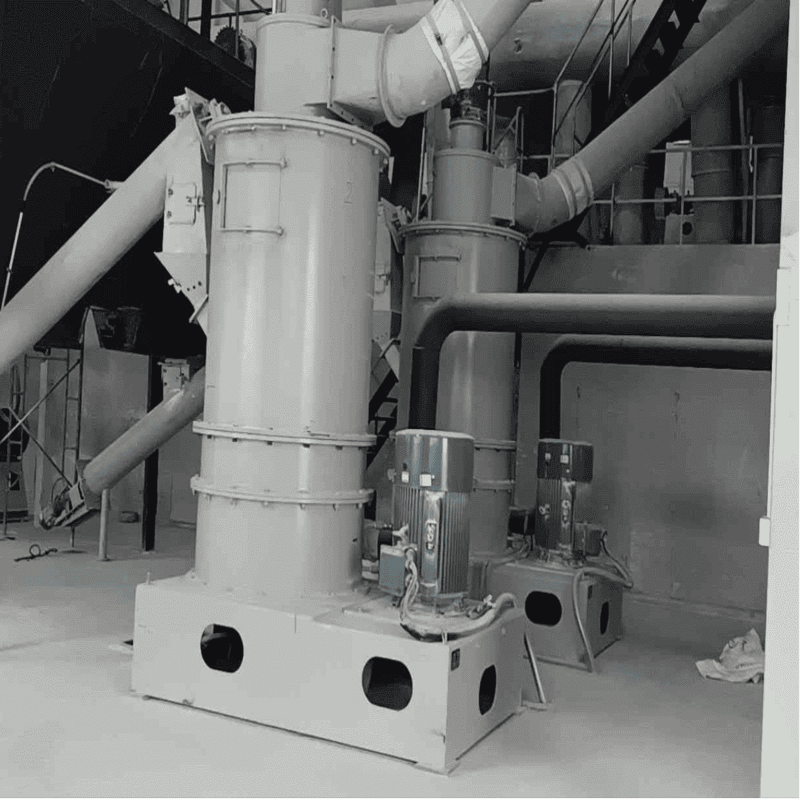
Roller Mills for Sale
About LKMixer
LKMixer is a professional manufacturer for grinding and mixing production line, grinder, mixer and granulator, shredder. These machines are widely used in food, pharmaceutical, cosmetic, health care products and chemical industries. The materials like Metal, Laundry Powder, Diamond. The Food materials like licorice, Licorice Flavored Spice, bean, tobacco, salt, Black pepper, corn, Coffee, rice, pepper, grain as so on. Grinders have many types such as Air cooled crusher , grinding machine cassava which is suitable for cassava, Ultrafine Grinding Mill covers 80-200mesh, and also Winnowing Dust Grinder or other grinding machines like SF Hammer. Welcome to contact us for details. Contact us for more information. Proposal, catalog, quotation.
Recommend Reading
You may also interest in other topics:
demolition hammer ph65 , 150KW EV Charger , bottle capping machine