Calcite grinding mill
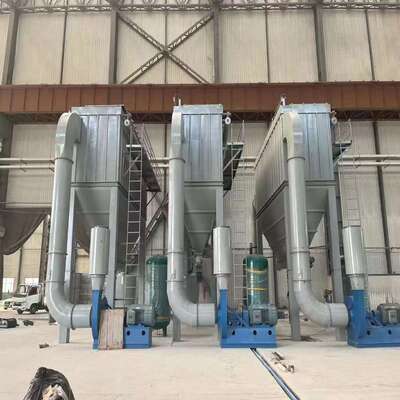
China No.1 Technology
- Our New type: Combined grinding wheel bracket – Demonstration of assembly
- Our New – type: Rhombic Spindle
- Easy to disassemble.
- Low cost of accessories.
- Spindle nut No loosening, No thread slipping, No falling off.
- Low cost, High reliability
Calcite grinding mill description:
A calcite grinding mill is specialized equipment designed for processing calcite ore into fine powder.
It typically adopts a ring-roller or vertical roller grinding structure, capable of crushing materials with Mohs hardness below 9.
Through multi-layer grinding and high-precision classification, it can produce calcite powder from 325 mesh to 3000 mesh.
It is widely used in plastics, coatings, papermaking and building materials industries to produce heavy calcium carbonate fillers.
What is Calcite grinding mill?
A calcite grinding mill is an industrial pulverizer specifically designed to process natural calcite ore into fine or ultra-fine powder.
It uses high-pressure grinding rollers or high-speed impact mechanisms to crush calcite, combined with integrated classifiers to control particle size distribution.
It can produce powders from 325 mesh up to 3000 mesh, with uniform fineness and high whiteness retention.
Widely applied in mineral processing plants, it serves as a core equipment for producing heavy calcium carbonate used in plastics, rubber, coatings and construction materials.
What is the Calcite grinding mill process?
The light calcium grinding process is a tailored workflow for processing precipitated calcium carbonate.
First, pre-dried light calcium raw material is fed evenly into the grinding chamber, where agglomerated particles are dispersed and crushed via controlled shear and low-impact forces.
The ground fine powder is carried by airflow to the integrated high-precision classifier, which separates particles meeting target fineness for collection.
Oversized coarse agglomerates are returned to the grinding zone for reprocessing.
This closed-loop operation avoids over-grinding, preserves product whiteness, and delivers uniform, high-quality fine powder for downstream industrial applications.
What are the uses of Calcite grinding mill?
Calcite grinding mills are core equipment for processing natural calcite ore into high-value heavy calcium powder.
They produce 325–3000 mesh calcite powder widely used as low-cost, high-performance filler in artificial stone, PVC products, rubber, coatings and papermaking, improving product hardness and whiteness.
They also supply fine calcite powder for toothpaste, cosmetics, glass production and construction putty, and support high-purity calcite processing for chemical raw materials and environmental desulfurization applications.
What is the best Calcite grinding mill process?
The best light calcium grinding process is a closed-loop wet-dry combined optimized workflow.
It first adds a small amount of dispersant to pre-disperse the light calcium slurry, then uses a vertical sand mill for fine grinding to reach the target particle size, followed by secondary carbonization to adjust crystal morphology.
After low-temperature drying, the material enters a high-precision ring-roller mill for final depolymerization and classification.
This process avoids over-grinding, preserves product whiteness, delivers narrow particle distribution, and is widely recognized as the most efficient route for high-grade light calcium production.
Calcite grinding mill process Application:
The calcite grinding mill process is widely applied across several high-volume industrial sectors.
It produces heavy calcium carbonate powder for use as low-cost, high-performance filler in PVC, PE and rubber products, enhancing their mechanical strength and surface finish.
In construction, it supplies calcite powder for high-grade putty, dry-mix mortar and architectural coatings, improving product consistency and durability.
It also processes food-grade and pharmaceutical-grade fine calcite for toothpaste, dietary supplements and medical tablet excipients, meeting strict purity and safety standards.
Calcite grinding mill Processing Technology:
Light calcium grinding processing technology is a specialized pulverization technique tailored for precipitated calcium carbonate.
It adopts low-shear, high-dispersion grinding modes to break up agglomerated particles without damaging the original crystal morphology, effectively avoiding over-grinding that reduces product whiteness.
The process integrates online particle size monitoring and closed-loop classification, allowing continuous adjustment of grinding force and airflow parameters.
It can stably produce light calcium powder ranging from 325 mesh to 3000 mesh, with narrow particle size distribution, high whiteness, and excellent dispersibility for downstream industrial applications.
Guide to Calcite grinding mill: Mills, Tips, and Uses
This practical guide covers calcite grinding mill essentials, recommended models, operation tips and core uses.
Top mill choices include MTW European Raymond mill for 80–400 mesh mass production, vertical ultrafine mill for 400–2500 mesh high-yield fine powder, and combined ball mill-classifier system for large-scale 100,000-ton annual output lines.
Key tips: strictly remove iron from feedstock to protect grinding rollers, control raw material moisture below 6%, and adjust classifier speed to lock target fineness.
These mills produce heavy calcium powder widely used in PVC fillers, architectural coatings, papermaking and artificial stone production.